Saturday, November 14, 2009

3 simple eye exercises


Facing the work screen for hours is hard on the eyes.
That's why if you hold a desk-bound job, you're more likely to experience fatigue, eyestrain, and blurred vision. To reduce eye fatigue, experts recommend doing eye relaxation exercises after every 30 minutes of computer work. So make it a habit to protect your eyes with these relaxation exercises.

Eye Relaxing Exercises

1 Alternate focusing

Look out a window or at distant objects about 5 meters away from your work area. Then place your finger on your nose and focus on the finger tip. Alternate between focusing on the distant object and finger tip


2 Palming


Shut out light by cupping your hands over the eyes, with the palms resting on the cheekbones. You may still see other lingering traces of colors, but try to focus on blackness. Keep the light out for 15 to 20 seconds while taking deep breaths. Then uncover the eyes.


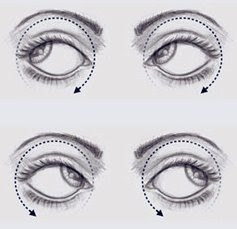
3 Eye circles


Keeping your head still, do a series of eye rotation, alternating between clockwise and anti-clockwise direction.


Dry eye syndrome

A common cause of dry eye syndrome is insufficient blinking. Squinting at a computer screen for prolonged hours reduces the rate of blinking, and can result in dry, irritated eyes. Using an over-the-counter eye drop can help alleviate this problem.
Signs of eye fatigueIf you experience any of the symptoms below, it's time for you to take a break!
  1. Blurred vision

  2. Tired eyes

  3. Dry eyes

  4. Eye pain

  5. Stiff shoulders

  6. Back pain

  7. Headaches

  8. Nausea

source

Bookmark and Share

H5N1 BIRD FLU By 2010

Polish Health Minister Ewa Kopacz expects an outbreak of the deadly H5N1 BIRD FLU between January and March of 2010 ! The Polish Health Minister Ewa Kopacz said recently at a press conference transmitted by Polish television channel TVN24 that the government will reject mass swine flu vacccination for its population because of safety concerns over the jab.


Kopacz said that the government would base its decision to use the swine flu vaccine based on the data from reliable clinical trials, but that there were no such reliable data for the swine flu jabs.
We will not order any AH1N1 vaccines unless there is full evidence they are completely safe, she said.
Each government is responsible for the welfare and health of its citizens, for recommending them health and safe medicines. So far, on any stage, no company we are negotiating with has been able to provide us with the most important thing for us the evidence of jabs safety and that it will not have possible side effects, she said.
I will not work under pressure! We will not order any AH1N1 vaccines unless there is full evidence they are completely safe, Ewa Kopacz said.
Ewa Kopacz also said that the ordinary, seasonal flu is much more dangerous than swine flu.


Bookmark and Share

Walk Slower Die Faster

Older people who walk slowly are about three times more likely to die from heart disease than those who walk faster, researchers said today.
Walking speed has already been linked to other issues such as falls, disability and increased number of admissions to hospital.

Now experts say that walking slowly is 'strongly associated' with an increased risk of dying from cardiovascular disease, including heart disease and stroke.

A total of 3,208 men and women aged 65 to 85 took part in the study, published online in the British Medical Journal (BMJ), and were followed for an average of five years.
Anyone with a disease that could cause problems with walking - such as those with Parkinson's disease or dementia - were excluded from the analysis.


Experts monitored walking speed using a series of tests, including checking normal walking speed and the maximum speed people could manage without running.
Over the course of the study, 209 people died (99 from cancer, 59 from cardiovascular disease and 51 from other causes).


The authors, from the University Pierre and Marie Curie in France, found a link between cardiovascular deaths and walking speed even when factors likely to influence the results were taken into account.

They wrote: 'Participants in the lowest third of walking speed had a 44 per cent increased risk of death compared with those in the upper thirds.
'With regard to specific causes of death, participants in the lowest third of walking speed had about a threefold increased risk of cardiovascular death, while no relation was found with cancer mortality.

'This increased risk of cardiovascular death was seen in both sexes, younger as well as in older participants, those with or without a high risk vascular profile, and those with low or usual physical activity.

The experts said there was evidence of a link between low walking speed and increased thickness of arteries, which is associated with cardiovascular disease.Walking quickly has also been shown to increase levels of "good" cholesterol in the blood, which can cut the risk of heart disease.

The authors said the results showed the need to keep fit and healthy as people age.
'These findings show that assessment of motor performances in older people with simple measures such as walking speed can be performed easily and that the role of fitness in preserving life and function in older age is important.

Judy O'Sullivan, senior cardiac nurse at the British Heart Foundation, said: 'This study supports previous findings which show that exercise is an essential part of maintaining a healthy lifestyle.
'Adults should be doing 30 minutes aerobic exercise every day - walking at a moderate pace is an easy way to achieve this.

Inactive and unfit people have almost double the risk of dying from coronary heart disease when compared with more active people.

Being active at any age helps control your weight, reduce blood pressure and cholesterol and help provide long-term benefits for your heart health.'Read more: